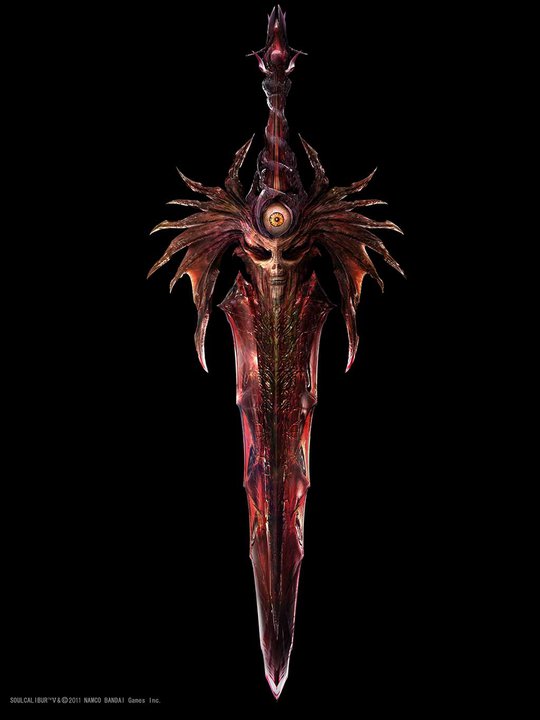
I know, I know, I haven't been posting much. Been a busy year. To tide you over until regular posting resumes here is a sneak peek at the introduction for an adventure I've written set in Limbo. I'm still deciding whether I should release it on DMs Guild or on the blog for free. Let me know in the comments what you think. (And pressure me to finish up the last couple of pages).
Wednesday, August 24, 2016
Friday, April 29, 2016
Roll Table - Madness
Have a new roll table this week, roll for Madness. I made this table for an upcoming adventure that goes a little more in-depth than blog posts have here in the past. The adventure takes place in Limbo, the plane of chaos. The players in that adventure will find themselves floating lost in the chaotic soup that is Limbo, some of them will have surely developed some form of delusional madness in that time.
This table can be adapted for whatever you need, but in my adventure Lawful characters are more susceptible to the madness caused by Limbo, while Chaotic characters are less susceptible. Depending on your table the madness can either be temporary (a day or two), or last until the character seeks some sort of treatment, be it magical healing like dealing with a curse, or coming to terms with their delusion through the help of their friends.
Labels:
gods of limbo,
madness,
roll table
Thursday, April 28, 2016
Helpful Online Tools #5 - Dungeon Edition
I've mentioned before how much I love online tools. In fact I have four previous blog posts (Saturday Grab Bag - 3 Online Tools, Saturday Grab Bag - Online Tools #2, Saturday Grab Bag - Online Tools #3, and Helpful Online Tools #4) detailing many tools that I use personally to prepare for my campaigns. Lately I have been trying to incorporate more dungeons in my games, so in honour of that here are three online tools that are great for creating a dungeon.
Paratime Design - Creative Commons Licensed B&W Dungeon Maps
This website compiles 133 black and white dungeon maps created by Tim Hartin and licensed under a Creative Commons Attribution. They're fine to use as long as you aren't trying to make any money from them, and you attribute them back to Tim Hartin. These maps really fit my style of dungeon play. They are essentially devoid of themeing, meaning they can be plugged into nearly any campaign. I would highly suggest printing a few of these off in case you need a quick dungeon at your table.
donjon - 5e Random Dungeon Generator
I have mentioned donjon before, but it is worth repeating because of how many incredibly useful tools they have. This tool, as well as other tools for other versions of D&D (or a more generic, rules agnostic) is a wonderful tool for generating full dungeons at the click of a button. Fill out some simple information like size, shape, character level, and party size, and it generates a fully-fledged dungeon complete with map, wandering monsters, traps and treasure.
Dave's Mapper
Many dungeon tools create maps that feel somewhat sterile, using the basic functionality of the Dungeon Master's Guide to create a functional map. While that can be helpful, Dave's Mapper solves this problem by using real, hand-drawn maps. These maps are broken into segments and randomly thrown together, connecting doors and hallways, to create a map that is more interesting than the sum of it's parts. Each segment can easily be rotated, moved around, or replaced, making it customizable in a way our other two tools lack. If you are to take anything away from this blog post, it should be that Dave's Mapper should be added to your campaign-planning arsenal, in order to become a true Master of Dungeons.
Labels:
dungeons,
online tools,
tools
Friday, April 22, 2016
Non-Combat Magical Item - Universal Registrar
Like all Non-Combat Magical Items on MasterOfDungeons this article should be taken as inspiration, not a rule of law. You are the master of your own dungeons and you should modify and change anything to fit your table and your world. Always try to modify any RPG ideas you find, it will make you a better Master of Dungeons, as well as make everything better suited for your players.
Universal Registrar
Wondrous item, Legendary
A Universal Registrar exists for each plane, and demi-plane in the multiverse. This large, yet not unwieldy, tome contains the recorded birth and death dates of every sentient, named, being in the realms. It is kept in chronological order, grouped into two sections, one for deaths and another for births. It is updated in real time, as beings are born and killed.
Although the number of births and deaths throughout the ages reaches near uncountable on many planes, the book is always the size of a fairly large textbook, and someone who is attuned to the book can find the names and dates of whoever they are looking for fairly quickly. Scholars are unsure of how this works, as the pages do not turn automatically, nor appear to change in contents or appearance.
The tome is unable to leave the plane of it's origin. If it is destroyed it will appear elsewhere in the plane.
The deaths and births appear immediately as they happen, but do not appear before that, meaning the book cannot be used to make predictions about the future. Children born without a name will be written in the book upon being named. If no name is given before their death, they will never appear in the book.
A small group of cultists have devoted their lives to the book. They are all purchased as slaves before birth from pregnant mothers who are instructed to never name the child. They are often employed by the wealthy to confirm the deaths of enemies, allies, and political rivals. Bounty Hunters and Assassins also sometimes purchase notarized certificates to present to their employers to prove that a kill has been accomplished in cases where a body cannot be transported.
Labels:
Non-Combat Magical Item
Thursday, April 21, 2016
5e Spells and which classes can cast them
For my own purposes I have created these little reference sheets as an easy way to see which classes can cast each spell. Grouped by level.
Share or print these as you like. If you can easily attribute them to MasterOfDungeons.blogspot.ca that would be awesome, if not don't worry about it.
An imgur album of the pictures can be found here. Enjoy.

Share or print these as you like. If you can easily attribute them to MasterOfDungeons.blogspot.ca that would be awesome, if not don't worry about it.
An imgur album of the pictures can be found here. Enjoy.

Tuesday, April 19, 2016
Random Vendors and Shops
Most towns of any decent size have their own marketplace. In addition to any bakers, potion dealers, and blacksmiths there may be some shops with a slightly more niche target market. Roll a d20 against the following table, or pick as you see fit.
| *Signal Tomes are a Non-Combat Magical Item explained in a previous blog post here. |
Labels:
roll table,
shops,
stores,
vendors
Monday, April 18, 2016
On Game Prep
I'm back! Master of Dungeons is back again, with hopefully pseudo regular updates to help you to achieve the respectable title of Master of Dungeons. This week we discuss how you don't really need to prep for your game sessions. This has been discussed previously on the blog, most recently in this Quick Tip about DMing and Improv.
I'm a big advocate of improv as a DM. I see far too many Dungeon Masters spend hours and hours prepping a weekly game of DnD. This is fine, if you enjoy preparation, but it is completely unnecessary. I cringe every time I see a DM burn out from session prep, and cause his campaign to fizzle out, because it is completely unnecessary. Not only will overly prepping your games cause you to start dreading your favourite hobby, but it doesn't improve the game. If anything it limits it by causing you to railroad your players, else your preparation be for nothing.
I'm not saying you shouldn't have a basic idea of what you want to accomplish in a session, or in a campaign, but that is the sort of high-level preparation you can do while commuting or waiting in line at McDonalds. Complex maps and encounter preparation, and just generally planning out everything that will be done in a session is completely unnecessary.
In the blog's first ever Online Tools post I wrote about Kobold Fight Club. This website is the single greatest tool in a DMs toolbox. Before each session I muck about in this tool, writing down a few enemies that are a good level for my players level and numbers. I write down about how many of that enemy would make a good medium or hard encounter, and the page number. You can filter based on type or keywords, so it is effortless to create a handful of easy encounters in minutes.
| Kobold Fight Club is the easiest way to create encounters for your games |
Sunday morning I had a session to run for my secondary group on Roll20, we hadn't met in three weeks and the group was just travelling without much planned. I was able to create a nice four hour session using only Kobold Fight Club, the Dungeon Master's Guide, and my own improv ability.
I hadn't run a dungeon yet with this group, so fifteen minutes before the session I thought this would be a good time for one. I searched the easy to use Roll20 site for a small dungeon map, although you could find one anywhere online. I decided that this dungeon looked like it might be occupied by undead, so I needed a reason for the players to enter the dungeon.
I flipped through a couple NPC ideas I had rolling around in my head and landed on Professor Cogsworth, a gnomish professor who studies engineering and the manufacture of extravagant artifacts. I decided that he might have a brother, who is also a professor of sorts, but studies magic instead of the physical. Perhaps Cogsworth had come across some sort of magical question and needed to talk to his brother about it. His brother of course had a sort of magic laboratory in an underground dungeon because it had the proper combination of ancient arcane runes and triangulation of ley lines.

The party would encounter a strange cart, it would stop in front of them and attempt to hire the party to investigate his brother's laboratory. Cogsworth had seem some sort of skeletons and gotten spooked and he needed the party to clear the place out and help his brother, who he assumed had been gnome-napped. For good measure I threw in a weird nerdy professor mixed with a stuttering yoda speech pattern, and he felt like a full-fledged NPC.
In the dungeon, I used the highly useful Random Dungeon tables near the end of the Dungeon Master's Guide. I tweaked each roll as I saw fit to better match the visuals and style of the dungeon and my group. Kobold fight club help me quickly populate it with Ogre Zombies, Gargoyles and Spooky Skeletons, and the party found a pair of true-sight glasses before nearly dying to Yellow Mold.
I actually lied to you at the beginning of this session, I said it took me only 15 minutes to plan a 4 hour session. In actuality the dungeon was only half-finished, so it only took 15 minutes to plan 2 sessions. Try out this kind of planning at your table, and I guarantee your game will be just as fun, if not more, and you'll save yourself the headache of planning a long session. Don't be afraid to tweak any results from a random table, and if you have any spur of the moment ideas, throw them in. Improvise, and have fun.
Labels:
DM,
DM Quick Tips,
DM toolkit
Monday, December 7, 2015
Helpful Online Tools #4
The first 3 Master of Dungeons articles on online tools were incredibly popular, so here is number 4. As always, all of these tools are ones that I use personally. You should also check out the first, second, and third blog posts if you haven't already.
Have you ever tried to think of a riddle for your players? It is exceptionally hard to do, at least for me. Even if you can think of a riddle, it is difficult to tell if the riddle makes sense, or can be easily solved without testing it. The Thieves Guild Riddle Generator completely solves this problem by giving you riddles and their solutions. Your time is better spent prepping for your games in other ways. A good Master of Dungeons has to be a cartographer, author, party planner, actor/improviser and director. Why should they have to become the riddler too?
Manata.net's NPC Generator
When I need a basic character sheet for a 5th edition Dungeons and Dragons NPC, this is the place I go. When you need a new character simply refresh the page. The page can easily be printed out and look pretty, and definitely highlights the different aspects to make your character unique and guide you in how to roleplay them.
This one is so simple, there is no point in saying much about it. What you see is what you get.
DMTools.org has many different generators and lists. Much of the content is built around an earlier edition, so may not be helpful for Fifth Edition Master of Dungeons like myself.
A lot of the generic stuff is so good that it makes up for the older edition. I particularly like the Benign encounters generator. It can help you create a roleplaying experience when your session is stagnating. Also good are the Demiplane, Towns, Mercenary Jobs, and PC/NPC generators.
I would stay away from anything with stat block, or any of the items. These items and monsters will not balance well with fifth edition, and there are better examples of them anyway in the previous articles about Online Tools linked at the beginning of this article.
Thieves Guild Riddle Generator
I love when I find an online tool that is completely different from any of the online tools I've used before. This one doesn't do NPCs, towns, cities, or monsters. It is purely for generating riddles.Have you ever tried to think of a riddle for your players? It is exceptionally hard to do, at least for me. Even if you can think of a riddle, it is difficult to tell if the riddle makes sense, or can be easily solved without testing it. The Thieves Guild Riddle Generator completely solves this problem by giving you riddles and their solutions. Your time is better spent prepping for your games in other ways. A good Master of Dungeons has to be a cartographer, author, party planner, actor/improviser and director. Why should they have to become the riddler too?
If you are interested in more useful online tools, check out the previous 3 blog posts (first, second, and third). Also, the Master of Dungeons Non-Combat Magical Items Deck is sort of like a generator, as you can use it to get a random magical item, you can get it online as well and I think it would be a great present for yourself, or any other Master of Dungeons in your life. (Plus it would support this humble blog).
I hope you love all these tools as much as I do, if you haven't already make sure to follow Master Of Dungeons blog on all of the relevant social media (Google Plus, Facebook, and Twitter), where I post all updates to the blog, as well as interesting things I find around the internet related to D&D and RPGs.
Labels:
online tools
Tuesday, November 24, 2015
Non-Combat Magical Item - Gold Dagger of the God-Killer
Master of Dungeons Blog just released a deck of cards based of our ongoing series of Non-Combat Magical Items. The deck is available here at DriveThruRPG. If you want to support Master Of Dungeons, or just want a unique but cheap Christmas present, then I encourage you to check it out. The upcoming item is a more in-depth look at an item available in the deck.
Gold Dagger of the God-Killer
Wondrous item, legendary
Like all Non-Combat Magical Items on MasterOfDungeons this
article should be taken as inspiration, not a rule of law. Non-Combat Magical
Items can be used in combat, they just aren't as simple as a +3 sword of
cutting stuff. You are the master of your own dungeons and you should modify
and change anything to fit your table and your world. You could modify this dagger
so that it works only on a specific god or fiend. Or that it contains multiple
gems that are the source of its power and each gem must be collected from
around the planes. Each god could own their own dagger that can only be used on
themselves, and they guard it with all of their power. Always try to modify any
RPG ideas you find, it will make you a better Master of Dungeons, as well as make
everything better suited for your players.
I list the Gold Dagger of the God-Killer to humour the extremists who believe that a mortal can become a god, not because I believe this item truly exists. - Lougwa's Manifest of Magic Artifacts
This item appears to be an exotic, gold, gem-encrusted,
ceremonial dagger. It is extremely rare, with many religious and magical
scholars doubting that it truly exists. Legends says the dagger can kill a god.
Variations of the legends say it can be used not just to kill a god, but a
demigod, demon-lord, fiend, titan, ancient, or any incredibly powerful
celestial or demonic being.
A god who is killed by being stabbed in the heart by this
dagger is permanently destroyed, preventing all resurrection and immortality
that gods are capable of. The dagger only works when used on the actual god,
and not an avatar or manifestation. The dagger acts as a channel for the godly
powers of the dead god, transferring all powers into the attacker. All planes
or realms under the dominion of the dead god are transferred to the attacker,
as well as all abilities, and godly titles.
Some say that the dagger works no matter what state the god
is in, but most agree that the god must be reduced to a severely weakened state
(0 HP) before the dagger is used. If
this dagger does exist, it is interesting to theorize whether any of the
existing gods gained their power through this or a similar
This item could be an interesting relic to give to your players. If they don't encounter a god then it will likely be useless. It could also be a powerful artifact that a campaign is built around. If you introduce this item in your games please let me know, either in the comments, Google Plus, Facebook, Twitter or email at MasterODungeons@gmail.com
The write-up of the Potentially Sentient is obviously far more in-depth than what can fit in the deck on the face of a playing card. If you pick up the Non-Combat Magical Items Deck from DriveThruRPG (and it would be a fantastic way to support this blog). I recommend that you use the items as a jumping off point.
Labels:
Non-Combat Magical Item
Friday, November 20, 2015
On Being a Hero
In the last blog post I discussed Flaws and why they are important to characters and character development in RPGs. I then went on to list ten example flaws that you can use on NPCs or Player Characters. As this is a blog tailored more towards DMs, the list wasn't necessarily populated with only flaws that would be a good idea to pick as a player character.
A lot of comments seemed to think many of the flaws would be a bad choice for a player to pick, as they can slow down the game or cause major problems. Other comments thought some of them were bad because they were flaws that you wouldn't think would belong to a hero. Flaws that would likely prevent a character from picking up the mantle of a dangerous adventurer. Lastly, others thought that the flaws were fairly generic. This last one I will concede, I hadn't thought very creative flaws would be best for that blog post, but I will try to think of some for this one.
Flaws That Interrupt The Game
It is my opinion that anything that can interrupt a game is more the fault of the player and dungeon master, than that of the character. I will use the Lazy flaw from my last blog post to explain, although I think this applies for any character aspect that doesn't lend itself well to going with the flow of the group and DM.
A lazy character might not want to hike ten miles to save the princess, or will insist on sleeping until noon before starting the day's adventuring. This can cause conflict between the characters who want to just get things going, and the players who just want to move the story forwards. Some would argue that a lazy character would cause the game to constantly grind to a halt, as the rest of the players have to convince and motivate them to move forward with the party. I agree that something like this is possible, and maybe even likely, depending on the skill of the player. However, a skilled player knows when to throw a fuss for role-playing purposes, and when to move the game forward. A skilled Master of Dungeons knows when to let a conflict take place, and where to insert a hand-waved time-lapse, that allows the characters to stay true to themselves, while keeping the game fun.
Skilled players and DMs still need to control the game to ensure that it doesn't turn into "convince Player 3 to join the game simulator", but it isn't as hard as you might think, and can be easily accomplished with some Out-of-Character communication.
Characters that slow the progress of the party can be a source of story and role-playing opportunity, not just a hindrance. Someone who sleeps late may cause the party to miss the last passenger barge out of a port, causing them to pay a seedy smuggler to transport them. A character that complains about a long travel might find himself left alone in the comfortable tavern, that suddenly seems less of a welcoming, safe environment now that he is all alone with bags full of treasure.
As you can see, characters that you might assume would only create a boring game, can be a source of conflict, drama, and story. This brings me to my next point....
Flaws that Create a "Bad Hero"
Some readers after the last post made an argument that was close to: "Why would a character with Flaw x become a hero?" This applied to a few of the flaws, but was most relevant to the Easily Scared flaw. Heroes are impossibly powerful beings who travel the world going on adventures and saving the world, why would a coward become such a thing, when the life of a farmer or butler would be so much better suited to them?
Luckily, we can turn to fiction to find all sorts of Unlikely Heroes. Dungeons and dragons is largely based on the work of Tolkien, so I think a great example would be Bilbo Baggins. Bilbo was easily scared by many of the monsters and situations he encountered on his adventure, but he kept going and adventuring. By the end of his adventure he was quite the hero, and no one would have expected it at the beginning. He was no Conan the Barbarian, but the entire story is set up to show the reader that heroes can come from even the most unlikely of people.
No one is saying that players should create a character that runs from every single encounter and never participates in the game. Even incredibly scared people realize when it is important to fight. The players, as well as the Dungeon Master can move the story forward and create real drama around a character that isn't particularly well-suited for the life of a hero.
I'm tired of seeing the same Drizzt clones in all of my games. Create a character that isn't very impressive and see where the story goes. It might be a little bit of work, and might be different from what you're used to, but I think the rewards will greatly make up for it.
Of course you may still disagree with me, please leave a comment on Facebook, Twitter, and Google Plus, telling me how wrong I am (or how right), or leave a comment on Reddit.
And since I promised earlier, here are some flaws that are a little more creative than the ones I posted yesterday:
- Doesn't believe in magic - This skeptic knows that there are hucksters around every corner, and has learned not to believe their eyes. Never believing that any of the magic they see around them is anything more than a clever trick.
- Multiple Personality Disorder - Through a magical accident they have absorbed one or more other consciousnesses into their own. They find it very difficult to make a decision, or to relate to people. Some personalities may or may not remember what the others experience.
- Literal - They come from a culture with no metaphors. They take everything anyone says at face value, having a very difficult time understanding hyperbole and metaphor.
- Superstitious - This character has a plethora of rules to follow to prevent bad luck. Always knock three times on your helmet before a fight or the enemy will do it with their weapon, stab each fallen enemy in the throat after a battle where you've sustained damage or the wound won't heal, don't step on a crack or you'll break your mothers back.
Master of Dungeons has recently put out a deck of cards containing 32 Non-Combat Magical Items, inspired by the ten or so that have been posted on this blog. They are available here at DriveThruRPG. They are on sale for $5.99 for one more day and it would go a long way to supporting an independent blog. I'll be able to create much more content if I can raise some funds from this, maybe even hire an artist.
Wednesday, November 18, 2015
Flaws
Master of Dungeons Blog just released a deck of cards based of our ongoing series of Non-Combat Magical Items. The deck is available here at DriveThruRPG. It is currently on sale for $5.99, but only for a few more days before it goes up to $7.98. If you want to support Master Of Dungeons, or just want a unique but cheap Christmas present, then I encourage you to check it out.
Flaws
Flaws are what make any role-playing character unique. Players and NPCs can and should both have flaws. No one is perfect (unless you're making a Mary-Sue), and that is why I think all characters should be created with a flaw. Flaws give your character depth, and prevent only min-maxing. If real people have flaws shouldn't your characters?
Some flaws are better than others, if you want a very severe flaw you could try something like playing a blind character, who has heightened sense of smell and hearing, but would be disadvantaged at many types of dexterity check. Perhaps an amputee who can move slowly and easily get knocked down. Flaws create great role-playing opportunities, and while they don't usually make your character stronger, they can make the game more interesting and your characters more real.
Here are ten flaws that you can either roll from, or use as inspiration:
- Racist - Against any particular race (dwarves, elves, humans, half-breeds), or all other races.
- Alcoholic - Can't stop himself when it comes to drinking. Skill checks and saving throws may become disadvantaged, not to mention any embarrassing situations they are placed in.
- Shy - Can't talk to strangers, may start to stammer or go silent entirely. Alternatively the character might be shy just towards a specific gender.
- Cultist - A member of an obscure cult, with many practices and beliefs that may be abhorrent to the average person.
- Easily Scared - New things easily scare this character. They like their normal routine, and anything out of the ordinary can send them running for the hills.
- Bleeding Heart - A kind soul is usually a positive characteristic, but in some people it's over-the-top. This character has to stop and help anyone in need, making it incredibly difficult to accomplish anything. The most minor problems with even the least empathetic stranger can cause this character to drop everything to help them out.
- Hypochondriac - Adventuring can be a dangerous life, but usually not for the reasons this character thinks. Hypochondriacs rush to the nearest doctor or cleric with every minor scratch and bruise. Even a slightly rude look from an old woman will leave them believing they been cursed.
- Lazy - This character is completely content to stay in the castle or caravan. It is hard to convince them to get their armour on and start adventuring.
- Doesn't Speak Common - Many adventurers have a knack for picking up languages, but not always. This character doesn't speak common, and most likely only speaks the language they were born speaking. Communication will be very difficult.
- Greedy - This character can never have enough money. Everything that they can get their hands on has value to them, and it is difficult to get them to spend even the most modest amount of it.
Master of Dungeons has recently put out a deck of cards containing 32 Non-Combat Magical Items, inspired by the ten or so that have been posted on this blog. They are available here at DriveThruRPG. They are on sale for $5.99 for two or three days more only and it would go a long way to supporting an independent blog. I'll be able to create much more content if I can raise some funds from this, maybe even hire an artist. (And to be honest, there haven't really been many sales and it is a little discouraging.)
Labels:
flaws,
roll table
Tuesday, November 17, 2015
Non-Combat Magical Item - Potentially Sentient Sword
Master of Dungeons Blog just released a deck of cards based of our ongoing series of Non-Combat Magical Items. The deck is available here at DriveThruRPG. It is currently on sale for $5.99. If you want to support Master Of Dungeons, or just want a unique but cheap Christmas present, then I encourage you to check it out. The upcoming item is a more in-depth look at an item available in the deck.
Potentially Sentient Sword
Wondrous Item, Very Rare
Much has been written on sentient swords, their personalities, strengths, and faults. But where do these independently-minded weapons come from? While there are certainly multiple reasons why a weapon might become sentient, the recently discovered Potentially Sentient Sword is likely one of the more common ones.
When an adventurer attunes to a Potentially Sentient Sword, it doesn't yet contain a mind of its own. Over (hopefully) years of use, the sword will bond with the adventurer, copying the energies and patterns of the soul. As the hero grows in power, the sword too can become more powerful, fearing being replaced, the sword might destroy a more powerful sword, gaining its strength.
The sword will change in appearance to match the personality and alignment of its owner the longer it is carried. A good person may have the sword change to radiant and angelic, while an evil person may have the sword become demonic in appearance. This is an oversimplification, as other aspects of a person's personality can be reflected as well. A greedy, fancy carrier may wake up to find their sword covered in gold and gems, a musician may find the sword has sprouted lute-like strings.
When the carrier dies, the final aspects of the person's soul are copied to the sword. The weapon becomes sentient, with the personality and mind of its former owner. Some may despair upon waking after death and finding themselves as an inanimate object, while others may rejoice at the chance to spend eternity in battle, or defending their descendants.
The write-up of the Potentially Sentient is obviously far more in-depth than what can fit in the deck on the face of a playing card. If you pick up the Non-Combat Magical Items Deck from DriveThruRPG (and I would very much like you to). I recommend that you use the items as a jumping off point. For example, for this item you may want to think about whether a person can be raised from the dead after being transferred into the sword, whether they are trapped in there, or if it is a duplicate.
Labels:
Non-Combat Magical Item
Monday, November 16, 2015
Non-Combat Magical Item Deck
Hello all, it has been a while since the last blog post. I've gotten married, gone on a honeymoon and dealt with real estate agents and lawyers to buy a house. I should have had more blog posts in the bank to post the past few weeks but I hope to be back now.
To celebrate the return of normal blog-posting (hopefully) of Master Of Dungeons blog, we have released our first commercial product. This product is somewhat of a test. There is no money in the Master Of Dungeons coffers, so there is no fancy artwork to speak of. However we believe that this product will improve your time at your table, regardless of what edition or game that you play.


I would super appreciate anyone picking these up. Head on over to DriveThruRPG if you're interested. They will sell for $7.98 but for the first week it will be on sale for $5.99
To celebrate the return of normal blog-posting (hopefully) of Master Of Dungeons blog, we have released our first commercial product. This product is somewhat of a test. There is no money in the Master Of Dungeons coffers, so there is no fancy artwork to speak of. However we believe that this product will improve your time at your table, regardless of what edition or game that you play.
The Master Of Dungeons Non-Combat Magical Item Deck
After reviewing the fantastic Encounter Decks 3 we realized the benefit of using physical printed cards at the table. They don't take up very much space, are easily shuffled and randomized, and they can be split up easily, even given to a player as a handout if necessary.
Master of Dungeons has had the ongoing series called Non-Combat Magical Items since our inception. For those of you unfamiliar with the blog, or those who need an update, we define non-combat magical items as items that aren't specifically created with combat in mind. Non-combat magical items can be used in combat by a crafty player, anything can be turned into a makeshift weapon and these are no different. The DM shouldn't limit the creativity of the players. Non-combat magical items however, are not typically weapons or armour, so they don't have stats for damage or armour. If this becomes necessary in some way a DM should be able to figure out what to give it.
In 5th edition Dungeons and Dragons, the introduction of "bounded accuracy" means that players shouldn't be given loads and loads of +3 weapons and armour. Otherwise, they may become incredibly overpowered. It still seems like most blogs and even the Dungeon Master's Guide itself focus on weapons and armour. Players still thirst for magical items, but that doesn't mean we should overpower our players, what we need is a new class of weapon: Non-Combat Magical Items.
Now that you've been primed on what Non-Combat means here at Master of Dungeons, lets get to the cards. The product, Non-Combat Magical Items Deck contains 32 different Non-Combat magical items. A huge increase over the 10 or so that have been posted on this blog.
Since the items are contained in a physical deck of cards, they can easily be given to a player when they receive the item, allowing easier item management. They can be shuffled instead of using a roll table, and they can be mixed in with any potential future decks put out by Master of Dungeons (which will only happen if this one is successful).
Enough jibber jabber. Lets get to the 4 free cards to give you a taste of the deck.


I would super appreciate anyone picking these up. Head on over to DriveThruRPG if you're interested. They will sell for $7.98 but for the first week it will be on sale for $5.99
Labels:
deck,
drivethrurpg,
Non-Combat Magical Item
Wednesday, October 7, 2015
Wednesday Roll Table - Teleportation
This week's roll table. If you would like to support Master of Dungeons, then check out the absolutely amazing Encounter Decks 3 by Inkwell Ideas. (Check out the blog post here). And as always you should follow us on the social media of your choice: Google Plus, Facebook, and Twitter
Labels:
Wednesday Roll Table
Tuesday, October 6, 2015
Tuesday Quick Tip - You Can't Always Get What You Want
If your players think of a novel plan for sneaking into a castle, one that you didn't anticipate, it is a good idea to go with the flow and not force them to go through the front door like you planned for. However, that doesn't mean everything has to work the way your players plan. going with the castle example, they may become mistaken for servants, and have to finish some cleaning work or be discovered, they may discover the prisoners in the dungeon, etc.
Improv means being able to make things up on the fly, and working with your players instead of against them, however if you always let your players get away with their ideas then nothing is difficult, and there are no surprises. As soon as your players start thinking of something let your mind roam free, trying to think of any sort of consequences or twists that could occur. This is quite difficult at first but with practice you'll become very quick with twists and ideas. Your players may have great ideas, but they can't always get what they want, but sometimes they'll find they get what they need.
Would you like to support Master of Dungeons?
A few days ago Master of Dungeons reviewed the absolutely amazing Encounter Decks 3 by Inkwell Ideas. (Check out the blog post here). If you missed it, the short version is the deck is amazing and everyone should go out and buy it to add to their table. I highly recommend you check it out if you haven't already. And as always you should follow us on the social media of your choice: Google Plus, Facebook, and Twitter
Monday, October 5, 2015
Monday Non-Combat Magical Item - Mesmer's Anti-Teleportation Shield
With the increase in popularity of teleportation and planar
shifting, monarchs, fascists, elected leaders and the mortal avatars of snake
gods that rule the human cities were becoming frustrated with the lack of
control they had over who came and went through their borders and cities. What
good was a city guard or highway toll booth when every jock with a magic ring
or bush wizard could just say an incantation and appear miles away. The risks
to national security were great, not to mention losses in tariff revenue.
Mesmer was fed up for different reasons than his nation
ruling counterparts. Mesmer's bread and butter was long distance caravan
transportation of goods for merchants, now more often than not merchants were
opting to pay a premium to have a young wizard straight out of college magically
transport their goods. They were able to transport instantaneously, with no
risk of theft or damage, bypassing all import and export taxes, while often
charging less than traditional transport, (which Mesmer accredited to modern
Wizard schools lowering the number of mandatory business classes).
Mesmer's Anti-Teleportation Shield was pitched as a way to
increase tax revenue and national security by increasing control of the
borders. An added benefit was that it returned Mesmer's transportation company
to the top spot. The device is quite simple, coming in many sizes and price
ranges. Shaped like a small pyramid, around five feet squared at the base, the
device emits a powerful magic shield, that reaches out in a dome away from the
pyramid. Smaller models range about 100 feet from the device, while the
largest, most expensive range around 10 miles. The invisible shield prevents
all teleportation, planar travel, and communication through the shield.
The dome isn't necessarily spherical in shape, reaching
quite high into the sky. As an added benefit, (or negative depending on who you
are) the shield often interrupts teleportation that is targeted nowhere near
the dome, but who's magical energy passes through the dome, as teleportation
usually occurs in a straight line between origin and destination. Many teleporters
may find themselves severely inconvenienced, expecting to find themselves at
the party of the century on the island of Bul'toa, instead materializing in the
slums outside the city walls of the Metropolis of the Snake Gods.
Some unethical highway brigands have even modified Mesmer's
Anti-Teleportation Shields to act as a sort of net, allowing them to easily rob
the unsuspecting, and likely wealthy, wizard who is teleporting by.
Prices vary for the shields, depending on the size, order
quantity, and how much Mesmer's transportation company stands to profit from
increased trade.
A few days ago Master of Dungeons reviewed the absolutely amazing Encounter Decks 3 by Inkwell Ideas. (Check out the blog post here). If you missed it, the short version is the deck is amazing and everyone should go out and buy it to add to their table. I highly recommend you check it out if you haven't already. And as always you should follow us on the social media of your choice: Google Plus, Facebook, and Twitter
Sunday, October 4, 2015
Sunday Review - NPC Portraits Deck - Fantasy By Inkwell Ideas
A few days ago Master of Dungeons reviewed the absolutely amazing Encounter Decks 3 by Inkwell Ideas. (Check out the blog post here). If you missed it, the short version is the deck is amazing and everyone should go out and buy it to add to their table. This week I'm reviewing another product by Inkwell Ideas, (clearly they have some smart writers over there).
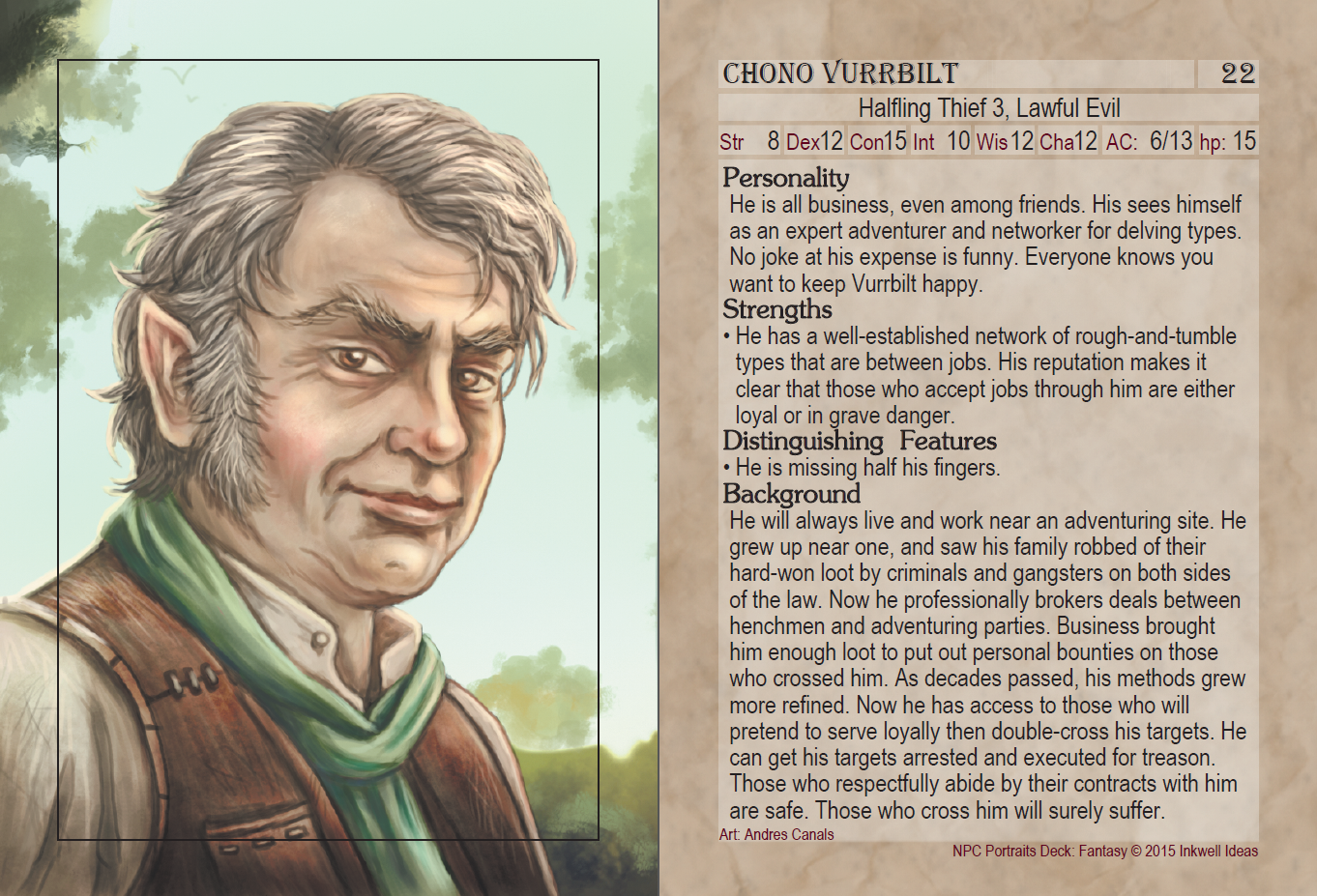
NPC Portraits Deck - Fantasy is another amazing product by Inkwell Ideas. At my table I tend to improvise a lot, but sometime that leaves flat and boring NPCs. These cards are the cure for that. Not only does it include 56 fully-rounded characters, each with their own write up for stats, strengths, personality, quirks, distinguishing features, possessions, background or any collection of things, but it includes a portrait for each character.
My players are definitely visual people. Sadly I don't have an artistic bone in my body, and my printer is broken. I always struggle to make the game for visual for them, often giving up entirely. This deck is worth it in my opinion just for the portraits, or the characters. The fact that it includes both makes it a must buy.
You obviously don't need to use the stats if you don't want, or you can adjust them to meet your needs, but they seem very well-written from what I've used so far. The pictures themselves have really improved my games so far, helping my players imagine certain NPCs that they are talking to.
If you could only afford one of the products by Inkwell Ideas, I would still recommend Encounter Decks 3, it is absolutely amazing. But if you're placing an order with DriveThruRPG and want to minimize your shipping costs per purchase, than I'd suggest tacking on NPC Portraits Deck - Fantasy as well.
Tuesday, September 29, 2015
Review: Encounter Decks 3 by Inkwell Ideas
A few weeks ago I read a review over at Newbie DM and instantly went out and purchased it from DriveThruRPG. Encounter Decks 3 by Inkwell Ideas.
Encounter Decks 3 is, obviously not the first encounter deck released by Inkwell ideas, but it definitely seems to be the best so far. Every card contains a map on one side, and an adventure idea on the other. The map now, unlike previous versions, goes with the adventure.
These cards are so incredibly perfect for how I DM, with a highly improvisational style. But I definitely think any Master of Dungeons could benefit from these cards.
The maps are good, (although I tend to not rely on maps too often) but the adventures really make these cards worth it. They're split into two main categories: Swords & Sorcery, and Science Fantasy, which at first seemed like a drawback for me, since I prefer to not run science fiction styled campaigns, but all of the cards are written in a way that it would be incredibly easy to convert one to the other. A mad scientist trying to rebuild a dead body becomes a necromancer trying to summon skeletons, that sort of thing. They're also system agnostic, so can easily be worked into any system or version that you play at your table.
The deck is sold as both a PDF or a physical copy, but I highly recommend the physical copy (which can also come with the PDF), the PDF makes it difficult to tell which map goes with which card, and defeats the entire purpose of having an easy to randomize pack of adventures at your fingertips.
I've used these cards already at the table and they were immensely helpful, having all of the information on one card makes it very easy to reference, and there are enough different encounters on each card to provide easily a night's worth of fun.
I really can't recommend these cards enough, I have never encountered (get it?) a product that can so revolutionize my games like these have. I really commend Inkwell Ideas, and I'm jealous I didn't think of it. I hope they go on to make dozens more of these packs, and I can promise that I will buy every single one.
Make sure to pick up a copy here. They're under $10 for a physical copy, so there is really no reason not to.
Labels:
encounter decks,
review,
tuesday
Monday, September 28, 2015
Monday Non-Combat Magical Item - Picturebox
I've been reading The Colour of Magic from the Discworld series by Terry Pratchett (it's amazing and I highly recommend it). That has inspired today's Non-Combat Magical Item, the Picturebox.
A small imp is summoned and bound to each picturebox. Only imps of the highest artistic ability are used. The imp lives inside the picturebox, having all of the comforts of home, (stone slab for sleeping, gruel for eating, high-quality canvas and paints). When the user of the picturebox wants to capture a moment for posterity, they simply point the picturebox at the target, being careful to not obstruct the lense and therefore the view of the imp, press the button, and hold the box as steady as they can for one minute. The skilled imp quickly paints a portrait of what he can see, the portrait is of the hyper-realistic style that is popular in the lower planes. Painting imps will only paint what they can see, so they do not take any critiques on style, or attempt anything abstract.
The picture is then handed to the user out the back door of the picturebox. The picture is a standard 6-inch square. It is customary, but not required, to give the imp a short coffee break before taking another picture.
Picturebox
Wondrous item, uncommon
The Picturebox is quite an amazing invention. It consists of a small hollow wooden cube, with a glass lense in the front, as well as a viewport for viewing. There is a small door in the back of it. The device is used to create still pictures, in as little as one minute.A small imp is summoned and bound to each picturebox. Only imps of the highest artistic ability are used. The imp lives inside the picturebox, having all of the comforts of home, (stone slab for sleeping, gruel for eating, high-quality canvas and paints). When the user of the picturebox wants to capture a moment for posterity, they simply point the picturebox at the target, being careful to not obstruct the lense and therefore the view of the imp, press the button, and hold the box as steady as they can for one minute. The skilled imp quickly paints a portrait of what he can see, the portrait is of the hyper-realistic style that is popular in the lower planes. Painting imps will only paint what they can see, so they do not take any critiques on style, or attempt anything abstract.
The picture is then handed to the user out the back door of the picturebox. The picture is a standard 6-inch square. It is customary, but not required, to give the imp a short coffee break before taking another picture.
Labels:
Monday,
Non-Combat Magical Item
Sunday, September 27, 2015
Sunday Review - AdventureAWeek.com
Today I will be reviewing an adventure from AdventureAWeek.com a subscription service that provides adventures for D&D 3.5 and Pathfinder. The adventure I received was Mini-Dungeon #001 - Buried Council Chambers. I received it through Mythoard, so I won't be commenting on the AdventureAWeek.com subscription model, or anything about their service, although it interested me greatly, perhaps Master Of Dungeons could start some sort of 5th edition subscription dungeon service, if you would be interested in receiving a one page dungeon or adventure every few weeks in the mail as a subscription service, be sure to leave a comment. If you haven't already make sure to check out yesterday's review.
The adventure I received came on one piece of high quality glossy paper, double-sided. It is quite a small dungeon, so there isn't too much to talk about. Quite a few decent quality riddles, some puzzles and basic magic items, all of which, although designed for Pathfinder would work with Fifth Edition D&D. There are a few enemies, but again easily adaptable for whatever level players you are using this for.
The dungeon map itself is very good, I think the dungeon is worth it just for the map and the riddles. I'm going to keep this tucked away for when I need a last minute dungeon, and the riddles will definitely add a layer of depth to it.
The story of the dungeon is good, although short it is all very well-written. If the quality of all of the AdventureAWeek.com products is as high as this I would definitely recommend it, even for DMs for systems other than Pathfinder, because, this one at least, was very simple to convert to 5th Edition. I'm going to pick a couple more of these up for use when I need a dungeon or adventure last minute.
Subscribe to:
Posts (Atom)